


Alex Rance: Building the Defensive Wall
Executive Summary
This case study examines the transformative defensive system engineered by Alex Rance, a cornerstone of the Richmond Football Club’s modern dynasty. It details how Rance evolved from a talented but erratic key defender into the league’s premier backman, architecting a cohesive and impenetrable defensive unit. Through a combination of elite athleticism, unparalleled game intelligence, and a selfless leadership style, Rance established a tactical framework—the "Defensive Wall"—that became the non-negotiable foundation for the Tigers’ premiership success. His approach redefined the key defender role, shifting it from a reactive, one-on-one assignment to a proactive, system-based command position. The implementation of this strategy directly correlated with Richmond’s ascent, culminating in three premierships in four years and solidifying the club’s status as a modern powerhouse. This analysis explores the background, strategic development, implementation, and quantifiable results of Rance’s methodology, offering key takeaways on building a championship-caliber defense.
Background / Challenge
Prior to the dynasty era, Richmond was a club defined by inconsistency and unfulfilled potential. While possessing formidable offensive talent in players like Dustin Martin, Jack Riewoldt, and Trent Cotchin, the Yellow and Black were often criticized for a fragile and disorganized defensive structure. The team’s game plan lacked a definitive identity, particularly in preventing opposition scores when momentum shifted. The challenge was systemic: how to construct a reliable, pressure-based defense that could withstand finals intensity and complement the team’s explosive offensive capabilities.
Enter Alex Rance. Drafted in 2007, his early career mirrored the team’s struggles—brimming with physical gifts but prone to costly errors and lapses in concentration. The pivotal shift began with the appointment of Damien Hardwick and a renewed club-wide focus on a contested, team-oriented brand of football. The specific challenge for Rance, and by extension the entire backline, was to transition from a group of individual defenders to a singular, interconnected unit. The goal was not merely to stop opponents but to create turnovers as the primary source of offensive ignition. Rance needed to become the system’s quarterback, its organizer, and its emotional engine, transforming Punt Road Oval from a training ground into a laboratory for defensive innovation.
Approach / Strategy
Rance’s strategy was built on a philosophical pivot: defense as a proactive, attacking weapon. This manifested in the concept of the "Defensive Wall," a system predicated on spatial control, communication, and collective responsibility rather than isolated spoils. His approach was multi-faceted:
- The Commanding Zone: Rance moved away from purely negating a direct opponent. Instead, he operated as a free safety, reading the play several moves ahead to zone off and intercept. His unparalleled closing speed and vertical leap allowed him to cover vast swathes of the defensive 50, effectively making the corridor and the space in front of his direct opponent his domain.
- The Catalyst of Connection: Understanding that his role was to empower those around him, Rance became the central communicator. He constantly directed teammates like Bachar Houli and Nick Vlastuin, instructing them on positioning and when to leave their own opponents to support. This created a web of defensive coverage that confused and suffocated opposing forward lines.
- The Selfless Sacrifice: The strategy demanded absolute commitment to the system over individual accolades. Rance’s willingness to leave his own man to impact a contest elsewhere—a high-risk, high-reward tactic—set the standard. It communicated a powerful message: trust your teammate to cover for you, and you cover for them. This bred an unbreakable culture of mutual reliance within the back six.
- Psychological Warfare: Rance incorporated a relentless, physical presence coupled with overt enthusiasm. A celebrated spoil or intercept was not just a stoppage; it was a momentum-shifting event, celebrated with visible passion designed to energize his teammates and demoralize opponents. He turned defense into a spectacle of will.
This strategic blueprint was developed in lockstep with Hardwick’s overall game plan, which emphasized relentless forward-half pressure. Rance’s wall was the final, formidable barrier, ensuring that any breach of the initial press could still be repelled with authority.

Implementation Details
The translation of strategy into action was a daily discipline at the club headquarters. Implementation focused on ingrained habits and specific, repeatable actions:
Drill-Specific Training: Training sessions at Punt Road Oval were meticulously designed to simulate the zoning and intercept scenarios Rance would face. Drills emphasized peripheral vision, where defenders were required to track the ball, their direct opponent, and two other attacking players simultaneously, making split-second decisions on when to zone off.
Non-Negotiable Communication: A silent defender was a failing defender. Rance instituted a culture of constant, loud communication. The backline developed a shorthand—calls for "switch," "come off," or "hold"—that allowed for rapid tactical adjustments mid-play. This turned the defensive 50 into a cacophony of organization.
Video Analysis as a Weapon: Rance was notorious for his obsessive video study, not just of opponents, but of his own and his unit’s positioning. He would identify patterns in opposition ball movement and work with coaches and teammates to install specific traps and triggers, such as forcing kicks to a particular flank where the Tigers’ defensive numbers were stacked.
Synergy with the Midfield: The system’s success was interdependent. The intense pressure applied by Dion Prestia, Martin, and Cotchin in the midfield forced hurried, high, and often predictable entries inside 50. This played directly into the hands of Rance and his intercepting unit. The implementation was a full-ground chain, with the defensive wall as its anchor point.
Leadership by Example: Rance’s training standards were legendary. His recovery sessions, yoga practice, and nutritional discipline were visible to the entire squad, setting a benchmark for professional preparation. His on-field demeanor—combining fierce competitiveness with joyous celebration—became the emotional template for the entire team, particularly in high-stakes moments at the Melbourne Cricket Ground.
Results
The efficacy of Rance’s defensive system is quantified in both team success and definitive statistical metrics, directly fueling the club’s golden era.
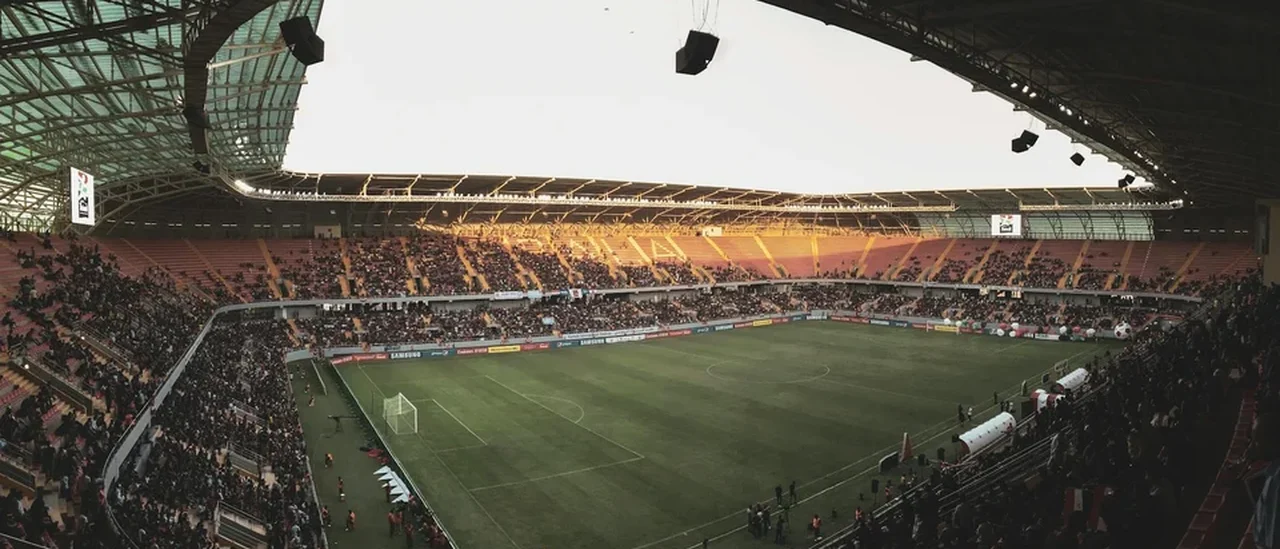
Team Success:
2017 AFL Grand Final: The system’s crowning achievement. Rance’s unit held the Adelaide Crows, the league’s highest-scoring team during the home-and-away season, to just 60 points—their lowest score of the year. This defensive stranglehold was the cornerstone of breaking the 37-year premiership drought.
2019 AFL Grand Final: In the back-to-back triumph, Richmond’s defense, still operating on Rance’s established principles despite his mid-season injury, dismantled Greater Western Sydney, conceding a mere 3.7 (25)—the lowest Grand Final score since 1960.
2020 AFL Grand Final: The three-peat was secured with another defensive masterclass, holding Geelong to 7.8 (50) in a dominant display.
Overall, from 2017-2020, Richmond boasted a win rate of over 75% and played in nine finals, winning eight.
Statistical Dominance (Rance’s Peak, 2014-2018):
Intercept Possessions: Averaged 9.2 per game (elite for a key defender), consistently ranking in the top 3 in the AFL.
Contested Defensive One-on-Ones: Won over 25% of his contests, a rate that led the league for key defenders and created countless turnover opportunities.
Rebound 50s: Averaged 4.5 per game, demonstrating his role in not just stopping attacks but initiating them.
* Team Defense Metrics: In the 2017 premiership year, Richmond ranked 1st in the AFL for points against and scores from turnovers generated from the defensive half. The team’s average points conceded dropped dramatically from 90.1 in 2016 to 77.2 in 2017, a direct reflection of the system’s implementation.
Key Takeaways
- System Over Individual: A great defense is a coordinated unit, not a collection of great defenders. Rance’s legacy is the system he built, which continued to thrive even in his absence.
- Proactive Defense is Offensive: Treating intercepts and turnovers as primary objectives transforms defense into the first phase of attack, creating a self-sustaining cycle of pressure and scoring.
- Communication is Tactical Infrastructure: Verbal organization is as critical as physical skill. Constant, clear communication creates a collective intelligence greater than the sum of its parts.
- Leadership Sets the Cultural Tone: A leader’s visible standards in preparation, execution, and emotional response become the de facto culture of the group. Rance’s joy and intensity were infectious.
- Synergy Across Lines is Critical: A defensive system cannot operate in isolation. Its success is magnified by, and dependent upon, the pressure applied further up the field.
For further analysis on how foundational systems can define an era, explore our profiles of other key players who shaped the Tigers' destiny. The impact of a single transformative idea, much like the defensive wall Rance built, can have reverberating consequences, a principle evident when examining complex systems, whether in sport or global affairs. Similarly, understanding the components of a successful system requires looking at its core elements, much like evaluating the fundamental aspects of any impactful subject.
Conclusion
Alex Rance was more than an All-Australian defender; he was an architect and a philosopher of a new defensive paradigm. By building the Defensive Wall, he provided the Richmond Football Club with the non-negotiable foundation upon which a dynasty was constructed. His approach solved the core challenge of defensive fragility by instilling a system of collective responsibility, spatial control, and attacking intent. The results—three premierships in four years, historic defensive records in Grand Finals, and the transformation of the team’s identity—stand as irrefutable evidence of his strategy’s success. Rance’s legacy endures not only in the flags won but in the enduring standard he set: that defense, executed with intelligence, communication, and unrelenting passion, is the ultimate catalyst for sustained team success. The wall he built at Punt Road Oval remains the defining structure of the Tigers’ modern prestige.
Reader Comments (0)