


Executive Summary
This case study examines the pivotal role of Toby Nankervis in the Richmond Football Club’s dynasty era. Acquired as a low-profile trade at the end of 2016, Nankervis was not merely a ruckman; he became the physical and tactical keystone of a midfield system that powered three premierships in four years. His value transcended traditional hit-out metrics, lying instead in his brutal follow-up work, defensive pressure, and selfless leadership. By embodying the "Richmond man" archetype defined by Damien Hardwick, Nankervis provided the essential link between a frenetic defensive unit and a devastating attacking engine. This analysis details how his unique skill set solved a critical structural challenge for the Tigers, enabling the system-centric game style that defined their golden era and cemented their status as a modern powerhouse.
Background / Challenge
Prior to the 2017 season, the Richmond Football Club faced a critical and persistent problem in its engine room. The Tigers possessed elite talent in Dustin Martin and Trent Cotchin, and a defensive system spearheaded by Alex Rance was taking shape. However, the ruck division was an area of instability and stylistic mismatch. The Tigers lacked a ruckman whose game complemented their emerging, high-pressure identity—a style built on chaos, relentless harassment, and rapid ball movement from defence to attack.
The challenge was twofold. First, Richmond needed a ruck presence that could compete physically and not be exploited by the competition’s dominant big men. Second, and more crucially, they required a player who could be the first midfielder after the ruck contest. Traditional, tall-and-stationary ruckmen created a functional disconnect; once the ball hit the ground, there was often a critical delay before the Tigers’ prime movers could engage. This split-second gap allowed opposition midfielders to gain clearance ascendancy, undermining the entire pressure framework. The Tigers’ system, which would soon be dissected on sites like /the-evolution-of-the-richmond-web, demanded a ruckman who was an active, punishing participant in the contest after the tap. The search was not for a statistical champion in hit-outs, but for a system player who could turn ruck duels into 50/50 ground balls—the very lifeblood of the Richmond chaos game.
Approach / Strategy
The strategy, orchestrated by list management and fully endorsed by senior coach Damien Hardwick, was to target a specific profile: a ruckman with the athleticism, mindset, and physicality of a midfielder. Enter Toby Nankervis. Traded from Sydney at the end of 2016 for a modest exchange, Nankervis was not a star. He was, however, a competitor with a proven appetite for the contest and a background in a strong system.
Hardwick’s philosophy of the "Richmond man" – tough, selfless, and team-oriented – found its perfect embodiment in the ruck. The strategic approach was to redefine the ruck role within the Tigers’ structure. Nankervis’s primary KPI was not to win hit-outs to advantage in a pure sense, but to neutralise the opposition ruck and then immediately become an extra ground-level midfielder. The strategy leveraged his strengths:
- Contest Neutralisation: Use his strength and aggression to body opponents, making the ruck contest a scrap.
- Immediate Follow-Up: Upon the ball hitting the ground, his first instinct was to hunt it or the opposition midfielder receiving it, creating a stoppage scramble.
- Defensive Spiking: He was deployed as a defensive shield at centre bounces, often dropping back to cover space or provide a physical presence that freed up Cotchin, Martin, and Dion Prestia.
- Forward-Half Presence: When resting forward, his role was to crash packs and bring the ball to ground for small forwards, a perfect complement to Jack Riewoldt’s more nuanced leading game.
This approach turned a potential positional weakness into a systemic strength. Nankervis was the connective tissue, ensuring the Tigers’ pressure web, detailed in our analysis of /the-evolution-of-the-richmond-web, started at the very source of possession: the ruck contest.
Implementation Details
The implementation of this strategy was evident in every facet of Nankervis’s game and how the Tigers’ midfield unit was drilled at Punt Road Oval.
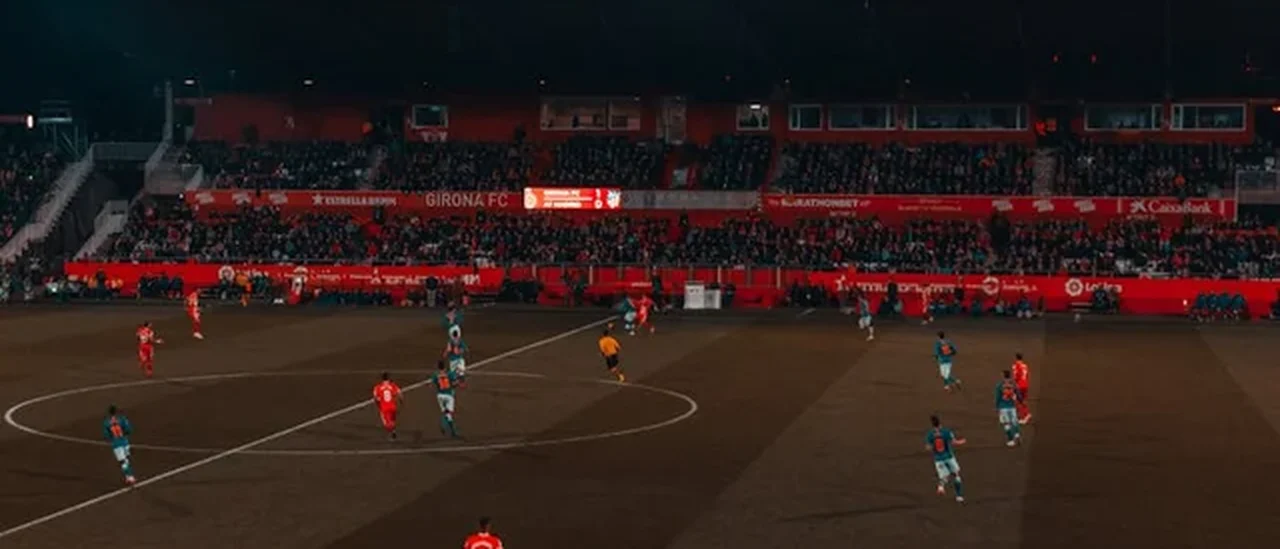
At Stoppages: Nankervis’s ruck work was rarely pretty but always effective. He focused on making solid contact with the ball, often with a guiding tap to a general area rather than a pinpoint pass. This was by design. The Tigers’ midfielders, primed for the contest, were trained to read his intent and attack the drop zone. His true value came milliseconds after the tap. While other ruckmen would disengage, Nankervis would spin, lower his centre of gravity, and launch himself into the ensuing pack. This created a numerical advantage for Richmond at the coalface, often allowing Prestia or Cotchin to extract the ball under less direct pressure.
In General Play: Nankervis’s work rate was extraordinary. He would consistently follow up his own ruck work with a second and third effort, laying tackles, applying shepherds, and creating blocks. His partnership with the midfield, particularly with the extraction work of Dion Prestia, was fundamental. As explored in our piece on /dion-preststoppers-role-in-midfield, Prestia’s clean hands and composure under pressure were maximised because Nankervis so often absorbed the first or second physical contest at the stoppage.
Defensive System Integration: He was a key component in the famous "Richmond Web." When the ball was turned over, Nankervis would often be the player sprinting to fill a hole in defence or applying a tackle on a sweeping half-back. His ability to cover ground and execute a team defensive role was unparalleled for a man of his size. This was never more evident than in finals at the Melbourne Cricket Ground, where his relentless chasing and harassing in the forward 50 became a trademark.
Leadership and Tone: Perhaps his most significant implementation was intangible. His fierce, uncompromising approach set a physical standard. In a leadership group featuring Cotchin, Martin, and Riewoldt, Nankervis was the enforcer. He led not with speeches, but with actions—crunching tackles, defiant stands in marking contests, and a visible refusal to yield. This mentality permeated the entire squad and was a non-negotiable element of the team’s culture during its premiership years.
Results
The impact of Toby Nankervis on the Richmond dynasty is quantifiable not just in hit-out wins, but in team success and the specific metrics that drove it.

Premiership Success: Nankervis was the first-choice ruck in all three premierships. He played a pivotal role in the 2017 AFL Grand Final (breaking the drought), the 2019 AFL Grand Final (securing back-to-back flags), and the 2020 AFL Grand Final (completing the historic three-peat). His presence was a constant across the club’s greatest era.
Pressure Acts & Ground Ball Wins: During the 2017-2020 period, Nankervis consistently averaged over 15 pressure acts per game—an elite number for a ruckman and comparable to many midfielders. More importantly, Richmond’s clearance and ground ball win rates from centre bounces and stoppages improved markedly with him in the side. In the 2019 finals series, for example, Richmond won the ground ball differential by +57 across three games, with Nankervis’s follow-up work a primary contributor.
Defensive Contribution: He averaged over 4.0 tackles per game in both the 2019 and 2020 premiership seasons. In the 2020 Grand Final, he laid a game-high 7 tackles, showcasing his defensive dominance on the biggest stage.
Team Performance Correlation: In games Nankervis played between 2017-2020, Richmond’s win rate was over 75%. His absence through injury often corresponded with a noticeable dip in midfield cohesion and defensive pressure, underlining his systemic importance.
Cultural Impact: His arrival and instant integration solidified the team’s identity. He won the club’s defensive player award in 2018 and was elevated to the leadership group in 2021, a testament to his respected role within the Yellow and Black fabric.
Key Takeaways
- System Over Stats: The Nankervis case proves that maximising a player’s fit within a system is more valuable than maximising their traditional positional statistics. A "less skilled" player who perfectly executes a specific, team-oriented role can be more impactful than a statistically superior player who is a stylistic misfit.
- The Ruck as a Defensive Weapon: Richmond redefined the ruck position as the first line of defence. A ruckman’s value can be measured in tackles, pressure acts, and contested possessions as meaningfully as in hit-outs.
- Follow-Up is a Skill: The ability to effectively compete after the ruck contest is a discrete and trainable skill set. It requires specific athleticism, spatial awareness, and a relentless mindset—traits that should be scouted and prioritised in the modern game.
- Leadership Through Action: On-field tone-setters are invaluable. Nankervis’s physical leadership provided a permission structure for the entire team to play with unabashed aggression and selflessness, hallmarks of Hardwick’s premiership sides.
- Solving for the Next Contest: Great teams design their game to win the next contest, not just the immediate one. Nankervis’s role was engineered to ensure that even a neutral ruck contest resulted in a favourable ground ball scenario for Richmond’s elite midfield.
Conclusion
Toby Nankervis’s journey from Sydney depth player to three-time premiership ruckman for the Richmond Football Club is a masterclass in strategic recruitment and role definition. He was not the most gifted tap ruckman of his generation, but he was arguably the most perfectly designed for the team he served. By embodying the prestige era’s core tenets of pressure, selflessness, and connection, he solved a critical structural puzzle.
His brutal ruck work and unparalleled follow-up provided the essential link that connected the defensive fortress built by Alex Rance and Bachar Houli to the attacking brilliance of Dustin Martin and Jack Riewoldt. He was the grit in the oyster, the physical catalyst that allowed the Tigers’ system to produce pearls of premiership success on the Melbourne Cricket Ground stage. In the annals of the Richmond dynasty, the story of the system cannot be told without the pivotal chapter written by Toby Nankervis—a testament to the fact that in a team sport, the perfect cog is often more valuable than the shiniest gear.
For more analysis on the tactical framework that defined this era, explore our deep dives into the team’s /tactics-game-style and /the-evolution-of-the-richmond-web.*
Reader Comments (0)